


Brais Currás: “Roman mining transformed the landscape of Baixo Miño, with many of these mines now hidden or destroyed”
The researcher from the CSIC Institute of History participated this Thursday at Social de Estás with a talk on the transformation of the valley’s landscape and communities during the Roman era
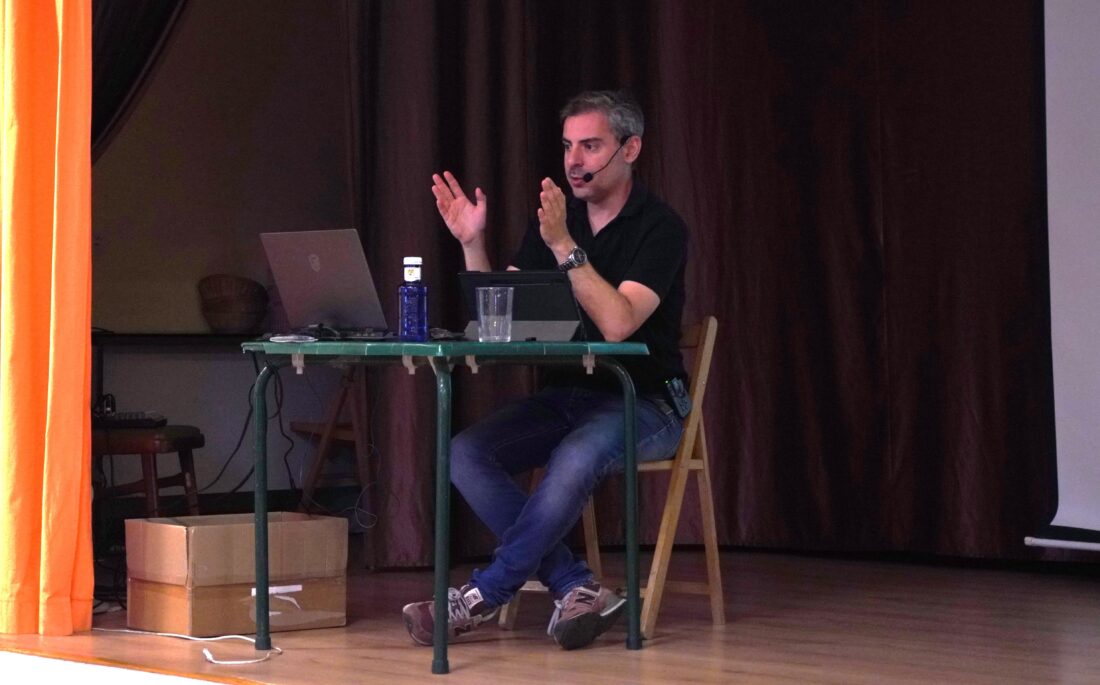
The BARferencias series by Fortalezas da Fronteira continued this past Thursday at Social de Estás, in the Tomiño parish of Estás, with a talk by archaeologist and researcher Brais Currás, from the Institute of History of the Spanish National Research Council. Under the title “Roman Gold Mining in Baixo Miño: People, Places, and Settlements”, Currás offered the public an archaeological interpretation of the profound transformation the territory experienced with the arrival and consolidation of Roman rule.
During his presentation, the researcher explained that his line of work focuses on the study of the transition between the Iron Age and the Roman era in the landscapes of the northwest of the Iberian Peninsula, with special attention to Baixo Miño, a territory to which he dedicated his doctoral thesis.
Currás pointed out that Baixo Miño was a space profoundly transformed by Roman rule as early as the Republican era, and with particular intensity from the Augustan period onwards. With the beginning of the Empire, he explained, a systematic exploitation of gold resources began, which modified both the landscape and the lives of the communities inhabiting the valley.
According to the researcher, the Miño valley and a large part of the peninsular northwest were marked by the presence of gold mines that supplied gold to the Roman Empire. This gold, he recalled, was fundamental for ensuring the functioning of the monetary system, the economy, and consequently, the Roman imperial system itself.
In the case of Baixo Miño, Currás highlighted that the mining landscape largely remains hidden today due to transformations accumulated over centuries. Furthermore, he denounced the damage caused to these sites by the construction of roads, industrial estates, and, above all, the planting of eucalyptus trees. However, he emphasized that an archaeological perspective allows for the identification of an extensive mining complex that produced gold and had a decisive impact on the organization of the territory, settlements, and ways of life of the people who inhabited this area.
The CSIC researcher also alluded to some of the mining settlements that emerged alongside these exploitations: “They were mining hillforts, but already completely Romanized,” he noted. In fact, a large part of the indigenous population who worked in these Roman mines was displaced, despite not being enslaved. Today, many of these settlements are destroyed by eucalyptus plantations.
The BARferencia offered the public a vision of Baixo Miño as a complex historical landscape, marked by the exploitation of natural resources, integration into the Roman Empire, and the transformation of local communities. The session also served to connect archaeological research with knowledge of the territory and the material memory that still remains in the landscape today.
The BARferencias are part of the open program of Fortalezas da Fronteira, an archaeological project centered around the As Torres site, in San Miguel de Taborda, Tomiño. The initiative combines research work, volunteering, training, routes, and outreach meetings with the aim of bringing archaeology, history, and the memory of the Galician-Portuguese borderland closer to citizens.
The series will continue in the coming days with new activities focusing on the fortified landscape, heritage education, and the memory of border territories.
No Comments