


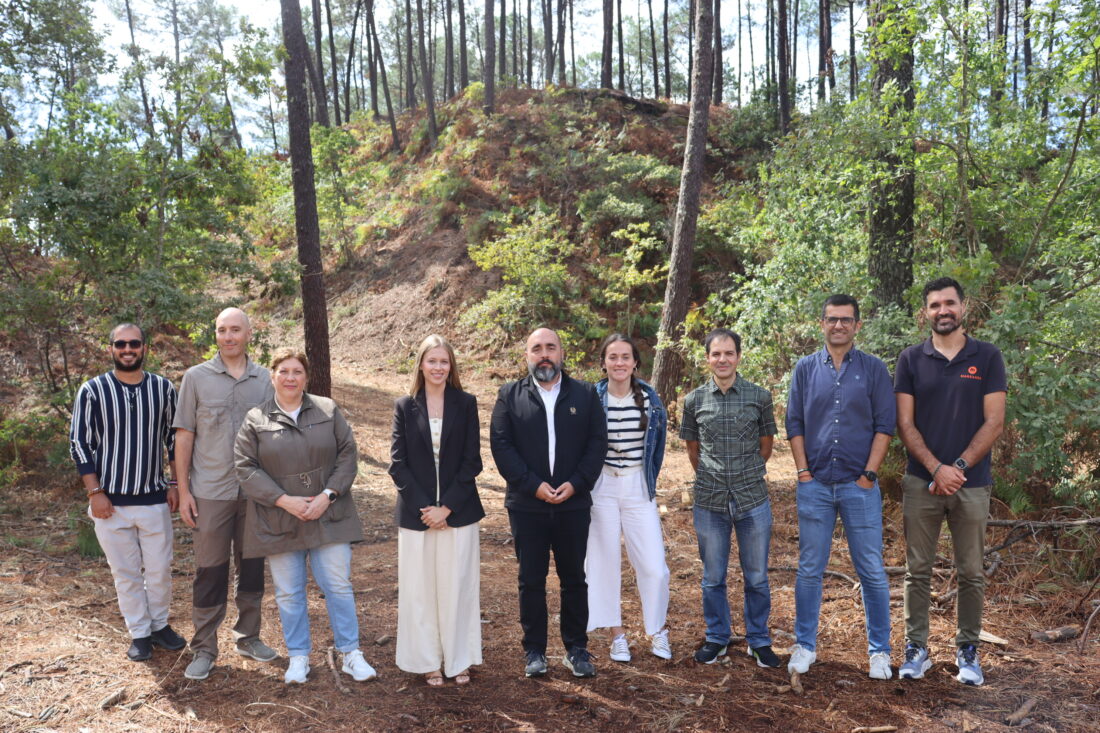
The Fortalezas da Fronteira project returns this July to the Baixo Miño with archaeological excavations, BARferences, and guided routes through the 17th‑century military fortifications
The Fortalezas da Fronteira project returns once again to the As Torres archaeological site, in Taborda, Tomiño, with an intensive programme of archaeological, cultural, heritage, and educational activities. The initiative, promoted by the universities of Santiago and Minho (Portugal) and the Taborda Community of Montes, is accompanied by a new edition of the “As Torres” volunteer camp, organised within the Xunta de Galicia’s Summer Campaign. It combines archaeological research, heritage outreach, social participation, and activities across the territory.
As happened last year, Fortalezas da Fronteira will hold numerous BARferences and guided visits — an open programme for the public that will take place between 6 and 18 July and is centred on the Galician‑Portuguese fortifications of the 17th‑century war between Galicia and Portugal. The programme will allow local residents and visitors to learn about the history of the fortified landscape of the Galician‑Portuguese border, as well as the progress made in the archaeological work.
The new archaeological campaign
According to archaeologist Rebeca Blanco‑Rotea, the work carried out in 2025 confirmed the presence of an embrasure linked to the Early Modern period, built over what may have been a medieval tower, as numerous remains dating between the 13th and 15th centuries were found. These findings point to an earlier occupation of the site and to its reuse as an area of control and defence. In addition, the entire complex sits atop a large Roman mining system.
In this new campaign, the team will expand the archaeological survey, carry out additional cleaning tasks, and undertake two test excavations: one in the possible late‑medieval structure and another in the Early Modern fort. The aim is to gain a better understanding of the evolution of As Torres between the Late Middle Ages and the Modern period, in a strategic location for controlling the crossings of the Miño River and the Pedra River towards Tui.
The Director‑General for Youth, Lara Meneses, highlights that this volunteer camp is “a magnificent example” of what these initiatives represent, as it allows young people to participate “actively in the conservation of our heritage” while experiencing a process of coexistence and learning. Meneses also emphasises the collaboration with the Taborda Community of Montes to enhance “a space of great heritage and environmental interest” and stresses the positive impact the project has both on young people and on the territory.
For his part, the project’s promoter, Xurxo Salgado — journalist and professor at the Faculty of Communication Sciences at USC — highlights that Fortalezas da Fronteira is an initiative “rooted in the people” that seeks “to bring heritage and archaeology closer to society, encouraging knowledge and protection.” Salgado recalls that the project was inspired by the stories told by his grandfather and aims “to bring together the people on both sides of the border and to highlight the rich heritage of the Galician‑Portuguese frontier.”
Programme of Activities
The programme will begin on Monday, 6 July, at 8:30 p.m. at Novo Bar de Carregal, with the BARference “Detectors and Archaeology: What Cannot Be Done”, delivered by archaeologist Gorka Martín from the University of the Basque Country.
On Thursday, 9 July, at 8:00 p.m., at A Social de Estás, archaeologist Brais Currás (CSIC) will give the lecture “Roman Gold Mining in the Baixo Miño: People, Places and Settlements”.
On Friday, 10 July, there will be a guided visit to the As Torres archaeological site at 12:00 p.m., departing from the old As Torres barriers. Later that day, at 8:30 p.m., at Al Dente in Tui’s San Antonio market, Rebeca Blanco‑Rotea will give the talk “Discovering the fortified landscape of the border: a look at Tui”, and Tiago Rodrigues will present “Physiognomies of the Fortified Landscape: (de)mythifying and (de)constructing the territory in the Minho River valley”.
On Saturday, 11 July, at 10:00 a.m., a guided tour of the Goián fortification will take place, led by Xoán R. Carnero Fernández and Rebeca Blanco‑Rotea, departing from Espazo Fortaleza. The activity requires prior registration at rutasdehistoria.com.
On Sunday, 12 July, there will be a visit to the fortified systems of Tui and Valença, also requiring registration at rutasdehistoria.com. The activity will begin at 10:00 a.m. at the Palco Música Corredera in Tui and will continue at 4:00 p.m. at the Interpretative Centre of the Fortresses of Valença.
On Tuesday, 14 July, at 8:30 p.m., Espazo Fortaleza will host the round table “Heritage Education, Memory and Leisure: How Can We Take Care of What Is Ours?”, featuring Santiago Veloso from the cultural association Ponte… nas Ondas!; Alfonso Lorenzo Vila from the Turonio CEPL Pedro Caselles Beltrán Educational Project; and Xaquin Cadilla Castro from the Piueiro Traditional Boats Cultural Association (A Guarda).
On Thursday, 16 July, at 10:00 a.m., the Pinzás Community of Montes hall will host the talk‑route “Pinzás Wetland: Landscape and Biodiversity in Monte da Groba”, guided by Manuel Ángel Pombo “Peque” from ANABAM. The activity requires prior registration at rutasdehistoria.com.
On Friday, 17 July, there will be another guided visit to the As Torres archaeological site at 12:00 p.m. In the afternoon, at 8:30 p.m., at A Taberna‑Tebra, Rebeca Blanco‑Rotea will give the talk “Land of Romans, Warriors and Soldiers: 2,000 Years of History at As Torres”. The session will conclude with the performance “Border Tales”, by Avelino González from Contacontos.
The programme will conclude on Saturday, 18 July, at 10:00 a.m., with the route “From the 1st Century to the 21st Century: How the Landscape Has Changed in 2,000 Years”, a guided walk around the surroundings of the As Torres archaeological site, departing from the Río da Pedra. The activity requires registration at rutasdehistoria.com.
The project
Fortalezas da Fronteira is a cultural, archaeological and outreach project focused on the As Torres archaeological site in San Miguel de Taborda, in the municipality of Tomiño. The initiative combines scientific research, youth volunteering, social participation and public dissemination to highlight the fortified landscape of the Galician‑Portuguese border and to contribute to the collective protection of this heritage.
No Comments